
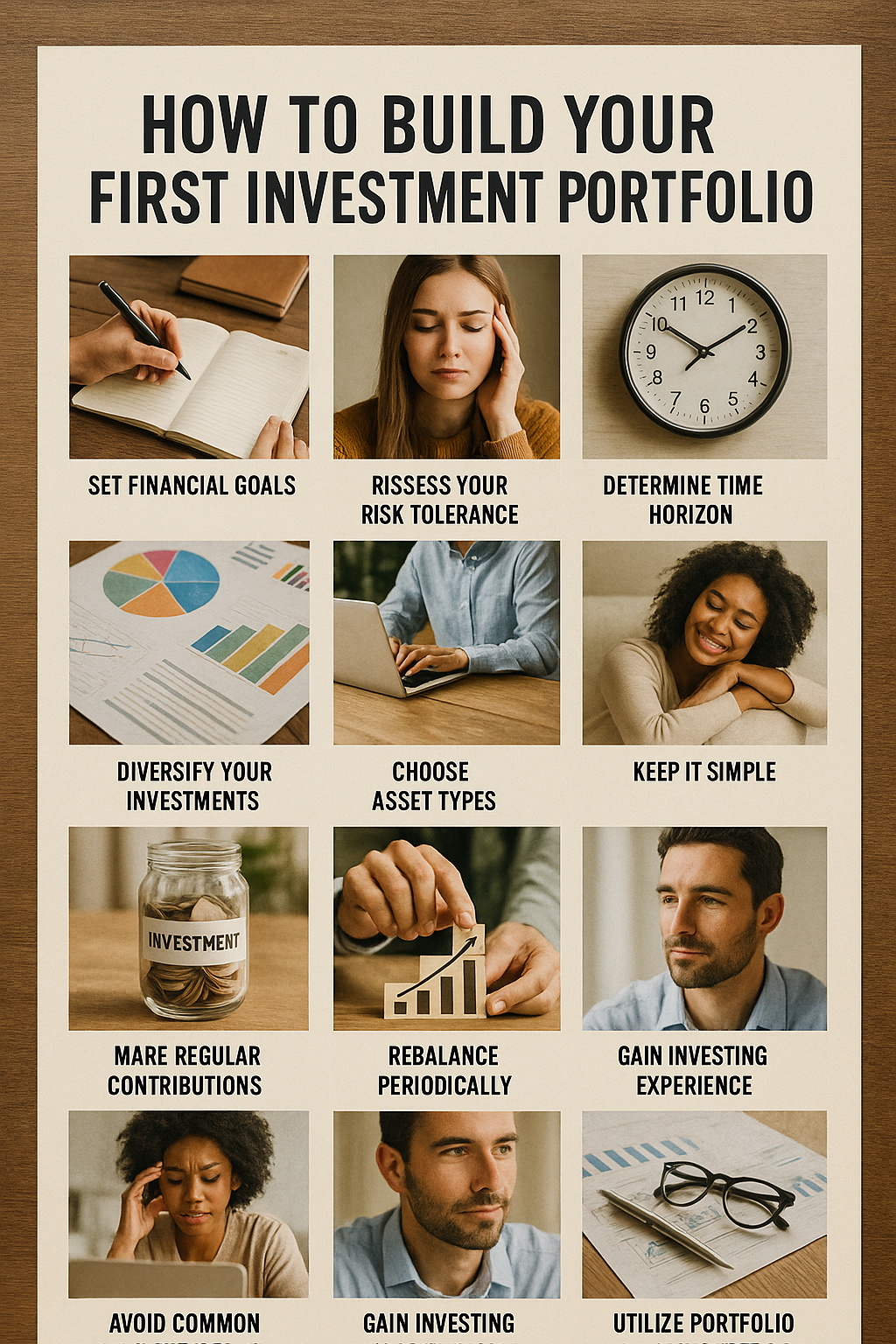
Why Building an Investment Portfolio Is a Milestone
Creating your first investment portfolio is one of the most important moments in your financial journey. It represents a shift from simply saving money to intentionally growing it. For many beginners, the idea of building a portfolio feels intimidating because it involves unfamiliar concepts, market risks, and long-term decisions. However, a portfolio is not about perfection or predicting the future. It is about structure, balance, and alignment with your personal goals. When you build a portfolio, you create a system that allows your money to work for you over time. This step transforms financial intention into concrete action and lays the foundation for long-term stability, independence, and confidence.
Understanding What an Investment Portfolio Really Is
An investment portfolio is a collection of assets chosen to work together toward specific financial objectives. These assets may include stocks, bonds, funds, or other investment vehicles. The purpose of a portfolio is not to chase quick gains but to balance growth, risk, and stability. Each component plays a role. Some assets aim to grow aggressively over time, while others provide protection and reduce volatility. A well-structured portfolio reflects your goals, your time horizon, and your tolerance for risk. Understanding this concept helps beginners move away from random investing and toward intentional planning. A portfolio is not a single investment; it is a strategy.
Starting With Clarity About Your Financial Goals
Before selecting any investment, it is essential to understand why you are investing. Your goals determine how your portfolio should be structured. Some people invest for retirement decades away, while others invest to buy a home, fund education, or build long-term wealth. Each goal has a different time frame and risk profile. Long-term goals allow for more exposure to growth-oriented assets, while shorter-term goals require more stability. When you define your goals clearly, decision-making becomes easier. You stop reacting emotionally to market noise and start evaluating investments based on whether they support your objectives. Clarity transforms confusion into direction and reduces unnecessary stress.
Understanding Risk as a Personal Experience
Risk is often misunderstood as something purely mathematical, but it is deeply personal. Risk represents how much volatility you can tolerate without abandoning your strategy. Two people with identical portfolios may react very differently to the same market movement. One may remain calm, while the other may panic and sell. Understanding your emotional response to risk is just as important as understanding market statistics. A portfolio should challenge you enough to grow your wealth but not so much that it keeps you awake at night. When risk aligns with your personality, discipline becomes easier and long-term success becomes more likely.
The Importance of Diversification in a First Portfolio
Diversification is one of the most powerful principles in investing. It means spreading your money across different types of assets so that no single investment dominates your results. Diversification reduces the impact of market downturns and smooths long-term performance. For beginners, diversification provides emotional comfort as well as financial protection. It helps prevent extreme losses and reduces dependence on a single outcome. A diversified portfolio is not about owning everything; it is about owning a thoughtful mix that behaves differently under various economic conditions. This balance helps beginners stay invested during difficult periods.
Understanding the Role of Time in Portfolio Construction
Time is one of the greatest advantages an investor can have. The longer your investment horizon, the more room your portfolio has to recover from short-term volatility. Time allows compound growth to work in your favor, turning small, consistent contributions into significant results. Beginners often underestimate the power of time and overestimate the importance of short-term performance. A strong portfolio respects time by focusing on sustainable growth rather than quick wins. When you align your portfolio with your time horizon, you reduce anxiety and increase the likelihood of long-term success.
Choosing Asset Types That Match Your Strategy
Every asset in a portfolio serves a purpose. Growth-oriented assets aim to increase value over time, while defensive assets aim to preserve capital and provide stability. A beginner’s portfolio typically benefits from a balance between these objectives. Understanding how different assets behave helps you create a structure that supports your goals. Rather than chasing trends, you choose assets based on their role within the portfolio. This strategic approach transforms investing from speculation into planning. When each asset has a clear purpose, your portfolio becomes easier to manage and adjust over time.
Why Simplicity Is a Strength for Beginners
Many beginners believe a successful portfolio must be complex, but simplicity is often more effective. A simple portfolio is easier to understand, monitor, and maintain. Complexity increases the likelihood of mistakes, emotional reactions, and unnecessary costs. Simplicity encourages consistency, which is one of the most important factors in long-term success. When your portfolio is simple, you are more likely to stick with it during market fluctuations. Over time, consistency produces better results than frequent changes driven by fear or excitement. Simplicity builds confidence and discipline.
The Role of Consistent Contributions in Portfolio Growth
Building a portfolio is not a one-time action; it is an ongoing process. Regular contributions strengthen your strategy by reducing the impact of market timing. When you invest consistently, you buy assets at different prices over time, smoothing volatility and reinforcing discipline. This habit helps beginners focus on progress rather than perfection. Consistent investing turns uncertainty into momentum and supports emotional stability. Over years, this approach amplifies the effects of compound growth and builds resilience into your financial life.
Understanding Rebalancing as a Tool for Stability
Over time, market movements cause your portfolio to drift away from its original structure. Some assets grow faster than others, increasing their weight and altering your risk level. Rebalancing is the process of adjusting your portfolio to restore balance. It helps maintain alignment with your goals and risk tolerance. For beginners, rebalancing reinforces discipline by encouraging thoughtful action instead of emotional reaction. It is a way to manage risk proactively rather than responding to market fear. Rebalancing keeps your portfolio intentional and stable.
Avoiding Common Beginner Mistakes
Many beginners make the mistake of reacting to short-term market movements. Panic selling during downturns or chasing recent winners often leads to poor results. Another common mistake is neglecting diversification or investing without a clear plan. These errors usually stem from emotional decision-making rather than lack of intelligence. Understanding that mistakes are part of the learning process helps beginners remain patient. A strong portfolio is built through discipline, education, and consistency, not through constant changes. Avoiding these pitfalls increases your chances of long-term success.
Developing Confidence Through Experience
Confidence in investing does not come from theory alone; it comes from experience. As you observe how your portfolio behaves over time, you gain insight into market cycles and your own emotional responses. This experience builds resilience and reduces fear. Over time, investing becomes less intimidating and more empowering. You begin to trust your strategy and your ability to adapt. Confidence grows naturally when you remain committed to a well-structured plan and allow time to work in your favor.
Building a Long-Term Relationship With Your Portfolio
Your portfolio is not something you build once and forget forever. It evolves as your life changes. Career shifts, family responsibilities, and new goals all influence how your portfolio should be structured. Viewing your portfolio as a long-term partnership helps you approach adjustments with intention rather than urgency. This relationship encourages reflection, learning, and growth. A portfolio built with care supports you through different phases of life and becomes a reliable tool for achieving financial independence.
Final Thoughts
Building your first investment portfolio is a meaningful step toward financial maturity. It requires clarity, patience, and discipline rather than perfection. When you understand your goals, respect your risk tolerance, diversify thoughtfully, and remain consistent, your portfolio becomes a powerful ally. Investing is not about predicting markets; it is about creating a system that supports long-term growth. With time, education, and commitment, your first portfolio evolves into a foundation for stability, confidence, and financial freedom. The journey begins with intention and grows stronger with every disciplined step you take.
This content is for educational purposes only and does not constitute financial advice.

Nanda Cardoso is a personal finance writer focused on financial education, money habits, and financial well-being. The content published on this site is for educational purposes only and does not constitute financial advice.