
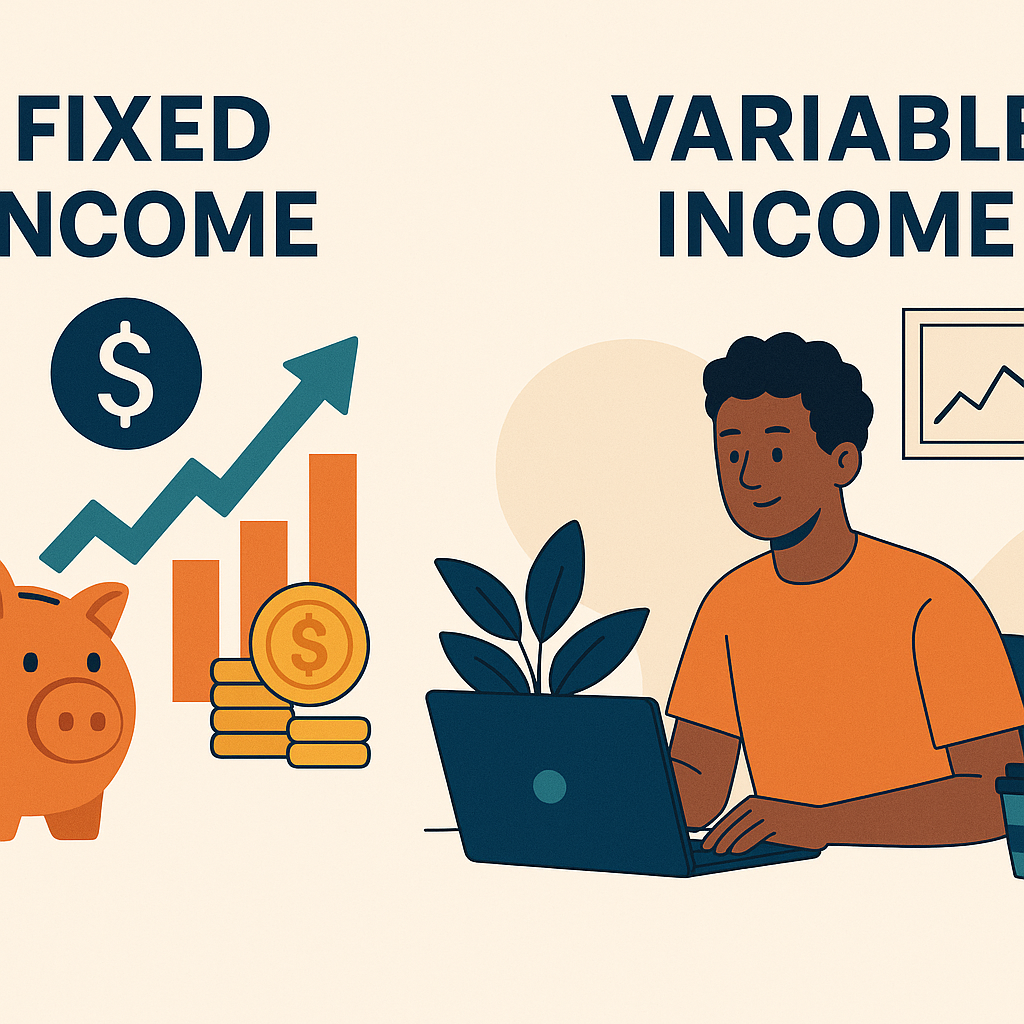
Understanding the Foundations of Investment Types
Learning the difference between fixed income and variable income is one of the first and most important steps for any beginner who wants to start investing intelligently. These two categories represent the fundamental ways that investments behave, and understanding their characteristics can help you build a financial strategy that feels safe, logical, and aligned with your long-term goals. Many new investors feel overwhelmed by unfamiliar terminology, and this confusion can lead to avoidance or poor decisions. Once the distinction between fixed and variable income becomes clear, the path forward becomes far easier to navigate. Both investment types serve important purposes, and neither should be viewed as better or worse. Instead, the key is understanding how each one works, what risks and rewards they carry, and how they can complement each other in a balanced portfolio.
What Fixed Income Really Means
Fixed income refers to investments that provide predictable and stable returns over a defined period of time. When you invest in a fixed-income product, you are lending your money to a government, corporation, municipality, or financial institution. In exchange for this loan, the issuer promises to pay you a set amount of interest and to return your principal at maturity. The entire structure is designed around stability. The interest rate does not fluctuate after the contract is established, meaning you know exactly how much income you will earn. Fixed income is often described as reliable, conservative, and low risk. It appeals to investors who prioritize safety or who want part of their money shielded from volatility. Fixed income is also helpful for budgeting, because the returns follow a known schedule that does not change. From the perspective of a beginner, fixed income is a friendly entry point into the investment world because it teaches how financial products work without exposing the investor to dramatic value swings.
Why Fixed Income Is Known for Stability
The stability associated with fixed-income investments comes from the nature of the agreement between the investor and the issuer. Unlike investments that rely on market performance, fixed-income instruments rely on contractual promises. If you buy a government bond, you know exactly when the interest will be paid and when the principal will come back to you. Governments, especially stable and economically strong ones, have historically low default rates, making government securities one of the safest investments available. Corporate fixed income carries slightly more risk, because companies can face financial difficulties, but even then, the contractual nature of the agreement provides a clear framework. This stability makes fixed income useful for conservative investors, those nearing retirement, or those who need a portion of their portfolio to be protected from market fluctuations.
Limitations and Risks of Fixed Income
Although fixed income is stable, beginners should understand that it is not risk-free. Inflation is one of the biggest challenges faced by fixed-income investors. When inflation rises, the fixed payments earned from bonds or certificates may lose purchasing power. Another risk comes from interest rate changes. When interest rates rise, existing fixed-income investments may lose market value, because new investments offer better returns. For investors who hold investments until maturity, this is less concerning, but those who want to sell before maturity may experience losses. There is also the opportunity cost to consider. Because fixed income offers lower long-term returns than investments like stocks, relying too heavily on fixed income can slow wealth-building. It remains an essential tool, but when used alone, it may not generate enough growth to meet long-term goals.
What Variable Income Actually Is
Variable income describes investments whose returns change over time based on market performance, economic conditions, investor sentiment, and the results of the underlying asset. Instead of lending money to an issuer, as in fixed income, you become an owner when you invest in variable-income products. When you buy a stock, you own part of a company. When you buy a share of an equity-based fund, you own a small portion of many companies. Because ownership ties your returns to performance, the results fluctuate. Some days the value rises, other days it may fall. Over time, however, variable-income assets have historically produced higher returns than fixed income. This potential for growth is why variable income plays such a critical role in wealth-building. Unlike fixed income, variable income does not offer guaranteed returns, but it offers the possibility of significant gains when held long enough.
Why Variable Income Can Produce Higher Returns
The higher return potential of variable-income assets comes from the way companies grow, innovate, and expand over time. When you buy stocks or equity-based funds, you are betting on the long-term performance of businesses and economies. As companies increase profits, expand their markets, or create new products, their value grows, and so does the value of your investment. Dividends may add additional income depending on the company. Because economies generally grow over long periods, variable income tends to rise in value despite short-term fluctuations. This growth potential makes variable income essential for goals like retirement or long-term wealth accumulation. A beginner who invests consistently in diversified variable-income products over many years stands to benefit from compound growth in a way that fixed income alone cannot provide.
Risks and Emotional Challenges of Variable Income
Variable income is powerful, but it comes with challenges that beginners must understand. The biggest challenge is volatility. Prices can move sharply for reasons that are sometimes difficult to understand. Geopolitical crises, economic reports, interest rate decisions, and even investor psychology can dramatically influence the market in the short term. This volatility can cause emotional stress, leading beginners to make impulsive decisions. Selling out of fear during a downturn is one of the most common mistakes and often results in financial loss. Because of this, variable income requires patience, discipline, and a long-term perspective. Investors should expect market drops, understand that these drops are normal, and trust that long-term performance historically trends upward. Diversification helps reduce risk, but beginners must still prepare mentally for fluctuations.
Comparing Fixed Income and Variable Income in Practice
The differences between fixed and variable income become clearer when viewed in terms of purpose, behavior, and expectations. Fixed income is predictable, steady, and low risk. It helps protect capital and provides income. Variable income is unpredictable in the short term but offers the possibility of long-term growth. Fixed income preserves what you already have, while variable income helps you build more. Fixed income suits short-term or medium-term goals, while variable income suits medium-term or long-term goals. One gives stability and certainty; the other gives opportunity and growth. Understanding these contrasts allows beginners to choose intelligently instead of guessing.
The Importance of Using Both Types in a Portfolio
Most successful investment strategies blend fixed and variable income to balance stability and growth. The proportion of each depends on personal goals, risk tolerance, and time horizon. A beginner with a long time horizon for retirement may rely more heavily on variable income because the short-term volatility matters less when investing for decades. Someone nearing retirement or saving for a short-term goal may use more fixed income to protect capital. A balanced middle-ground approach offers both steady income and growth potential. The key is not choosing one or the other but understanding how they work together.
Building a Beginner Portfolio Using Both Categories
An effective beginner portfolio starts with clear goals. If your goal is stability, you lean more heavily toward fixed income. If your goal is growth, you lean toward variable income. Once the purpose is defined, you allocate percentages that feel comfortable emotionally and financially. Over time, as your income grows, your emergency savings increase, or your financial knowledge deepens, you can adjust the ratio. A long-term plan might gradually shift allocations to maintain stability as goals approach. What matters most is alignment with your personal timeline and comfort with market behavior. No single allocation fits everyone; the ideal portfolio is one you can stick to consistently.
Diversification as a Core Principle
Regardless of whether you choose fixed or variable income, diversification strengthens your portfolio. Diversification spreads your risk across multiple issuers, sectors, and asset classes. With fixed income, diversification involves mixing short-term and long-term maturities, government and corporate bonds, or inflation-protected securities. With variable income, diversification often means choosing broad-market index funds or ETFs that hold hundreds or thousands of companies. Diversification protects against unexpected losses and creates smoother long-term performance. Beginners benefit tremendously from diversified products because they simplify investing while reducing risk.
Maintaining Discipline Throughout the Investment Journey
One of the greatest challenges in investing is managing behavior. Fixed income helps investors remain calm because it does not fluctuate, while variable income can test emotional resilience. Maintaining discipline means holding investments through downturns, resisting the urge to time the market, and reviewing your portfolio periodically rather than reacting impulsively to daily price changes. Setting automatic contributions and following a clear plan helps reduce stress. Rebalancing your portfolio from time to time ensures that you maintain the desired mix of safety and growth.
Final Thoughts on Choosing Between Fixed and Variable Income
The choice between fixed income and variable income is not about selecting the best or safest option. It is about understanding how each works and how they fit into your personal financial strategy. Fixed income offers predictability, lower risk, and dependable income. Variable income offers long-term growth, inflation protection, and wealth-building potential. Together, they create a balanced, resilient approach that supports both present stability and future prosperity. Beginners who take the time to understand these concepts set themselves up for smarter decisions, reduced anxiety, and stronger long-term outcomes. With clarity and consistency, anyone can build a portfolio that grows responsibly and sustainably.

Nanda Cardoso is a personal finance writer focused on financial education, money habits, and financial well-being. The content published on this site is for educational purposes only and does not constitute financial advice.